Robert Redford (89) has died at his Utah home. Born in Santa Monica, Redford briefly attended the University of Colorado on a baseball scholarship before dropping out. At Van Nuys High, Redford was a standout outfielder and teammate of Don Drysdale.
His path to stardom ran through Broadway with Barefoot in the Park in 1963. He went on to star in the film adaptation in 1967 alongside Jane Fonda. But it was Butch Cassidy and the Sundance Kid (1969), which put him on the map alongside his friend, Paul Newman.
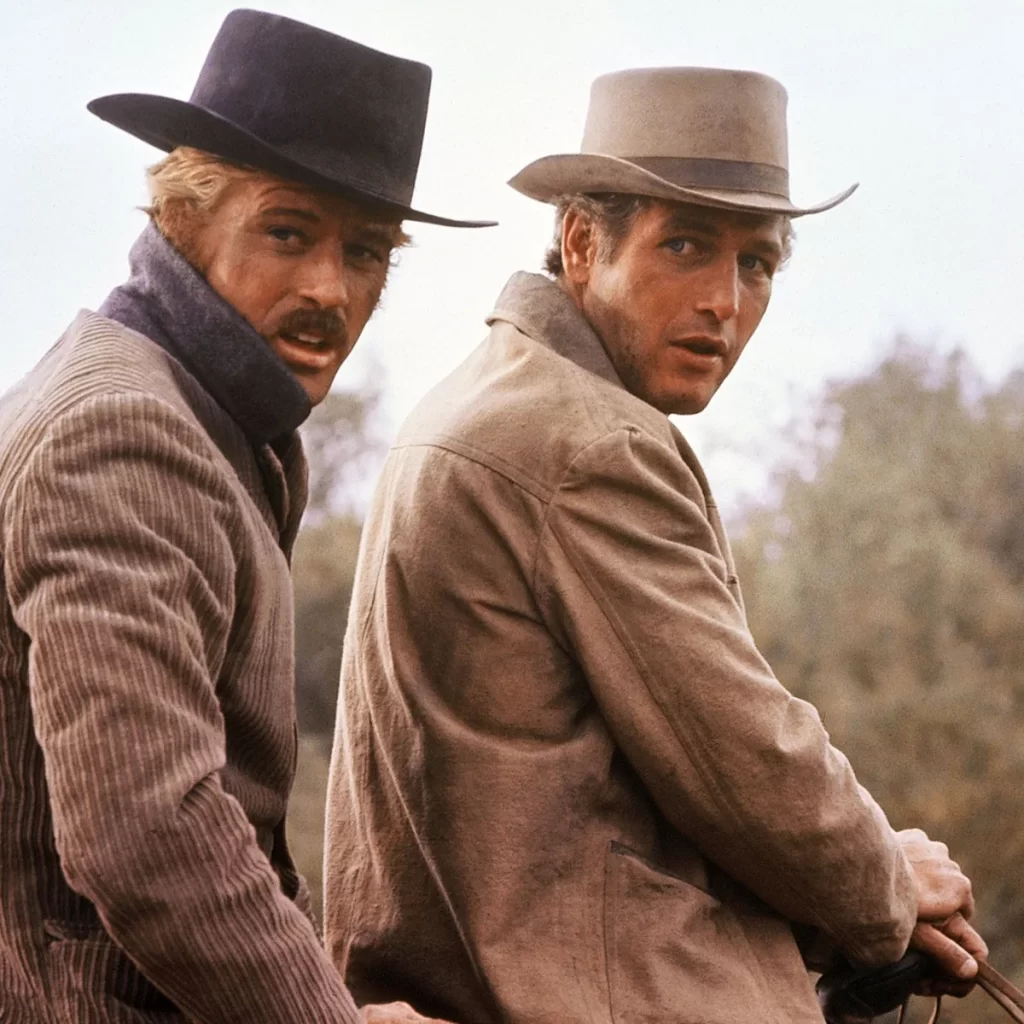
Loosely based on a true story, Sundance was pure American myth — two outlaws who are too good at the wrong thing in the wrong century.
Redford’s Sundance Kid doesn’t talk much. He watches. He calculates. He shoots straight and fast. Paul Newman gets the jokes. Redford gets the gravity.
But it’s the ending that sticks with you. They don’t ride off into the sunset. They walk into modernity and get erased by it. Machine guns replace six-shooters. The West closes. Freeze frame.
Redford specialized in playing men who realize the story is ending while they’re still in it, and he spent the next decade proving it:
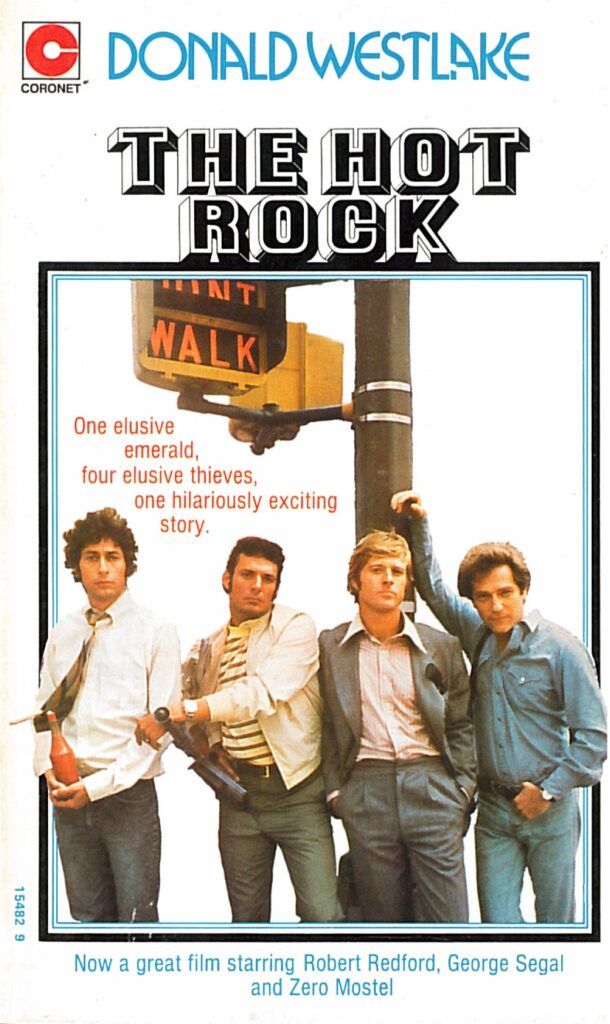
The Hot Rock (1972) — based on Donald Westlake’s novel. A jewel heist comedy about a diamond that keeps getting stolen back. When Westlake started writing the story, it was intended to be a Parker novel, but Westlake came to the realization that Parker would never put up with this caper, so he shelved it. It wasn’t until years later that he dusted off his old manuscript, laughed at his own work, and decided he had to come up with another character.
It’s classic Westlake, criminal competence constantly sabotaged by bad luck and bureaucracy. Redford plays it straight as Dortmunder, which makes the absurdity funnier.
The Sting (1974) — Again with Paul Newman. But this time, Redford isn’t the quiet gunslinger. He’s the apprentice grifter.
Set in Depression-era Chicago, structured like a pulp novel in chapters, scored with ragtime. It’s glossy. It’s elegant. It’s about deception as an art form.
Redford plays Johnny Hooker with just enough arrogance to make you nervous. He wants the big con. He wants legitimacy. He wants to belong in the room with the legends.
That’s a Redford theme: men trying to measure up to systems that are already rigged.
Became the top-grossing film of 1974 and one of the top-twenty highest-grossing movies of all time adjusted for inflation. Won seven Oscars, including Best Picture. Earned Redford his only Oscar nomination for acting. His own favorite performance.
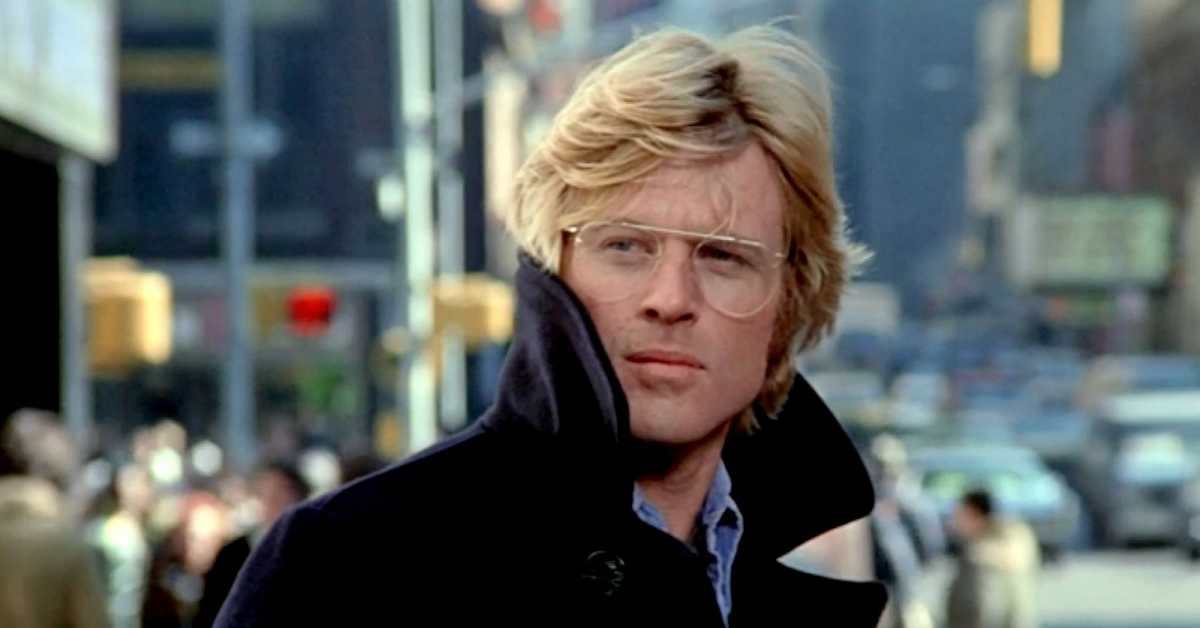
Three Days of the Condor (1975) — Because of this movie, I now own a peacoat.
Redford plays a CIA analyst who comes back from lunch to find his entire office murdered. He goes on the run from his own agency.
He hides in a Brooklyn apartment with a woman he essentially takes hostage. Sydney Pollack directing. Paranoid 1970s American cinema at its peak — post-Watergate, post-Vietnam, pre-Reagan. The system is rotten, and nobody can fix it.
Redford’s gift is that he doesn’t play Condor as an action hero. He plays him as a man who suddenly realizes he trusted the wrong system.
There’s a scene at the end where he tries to expose the conspiracy through the press. The final line is basically: “What if they don’t print it?”
It’s a story that hits pretty goddamn hard today if you ask me.
All the President’s Men (1976) — Another movie I watched recently, and really dug the wardrobe. Redford plays Bob Woodward opposite Dustin Hoffman’s Carl Bernstein.
This is investigative journalism shot like a conspiracy thriller. Long corridors. Deep shadows. Parking garage meetings with Deep Throat. I absolutely love the cinematography and editing in this one.
The film doesn’t end with Nixon’s resignation. It ends with typewriters clacking. The system isn’t fixed. The work just continues.
Redford wasn’t playing cowboys anymore. He was playing the American conscience — and showing how fragile it is.
Robert Redford never played fools and he never played monsters. He played men who thought the system might still work — and then discovered it didn’t.
He wasn’t flashy. He wasn’t loud. He didn’t chew scenery. Robert Redford just stood there — and you believed that if we had a few Robert Redfords running around, the country might just hold together. We might be alright.
As the founder of the Sundance Film Festival, he bet on independent voices before “indie” became a marketing category. It’s hard to quantify how many careers he launched through that festival alone, but many people in the industry have him to thank for putting them on the map.
A good life, a long one, that was very well lived.
And yes — the man had style. Not costume. Style. The kind that made you think America could be cool without being cruel. He was, in his own way, the American James Bond.
89 is a good run, but it still stings. It always does when someone who carried himself like that exits stage left.
Redford made paranoia look patriotic. He made integrity look cinematic.
That’s not a bad way to be remembered.